
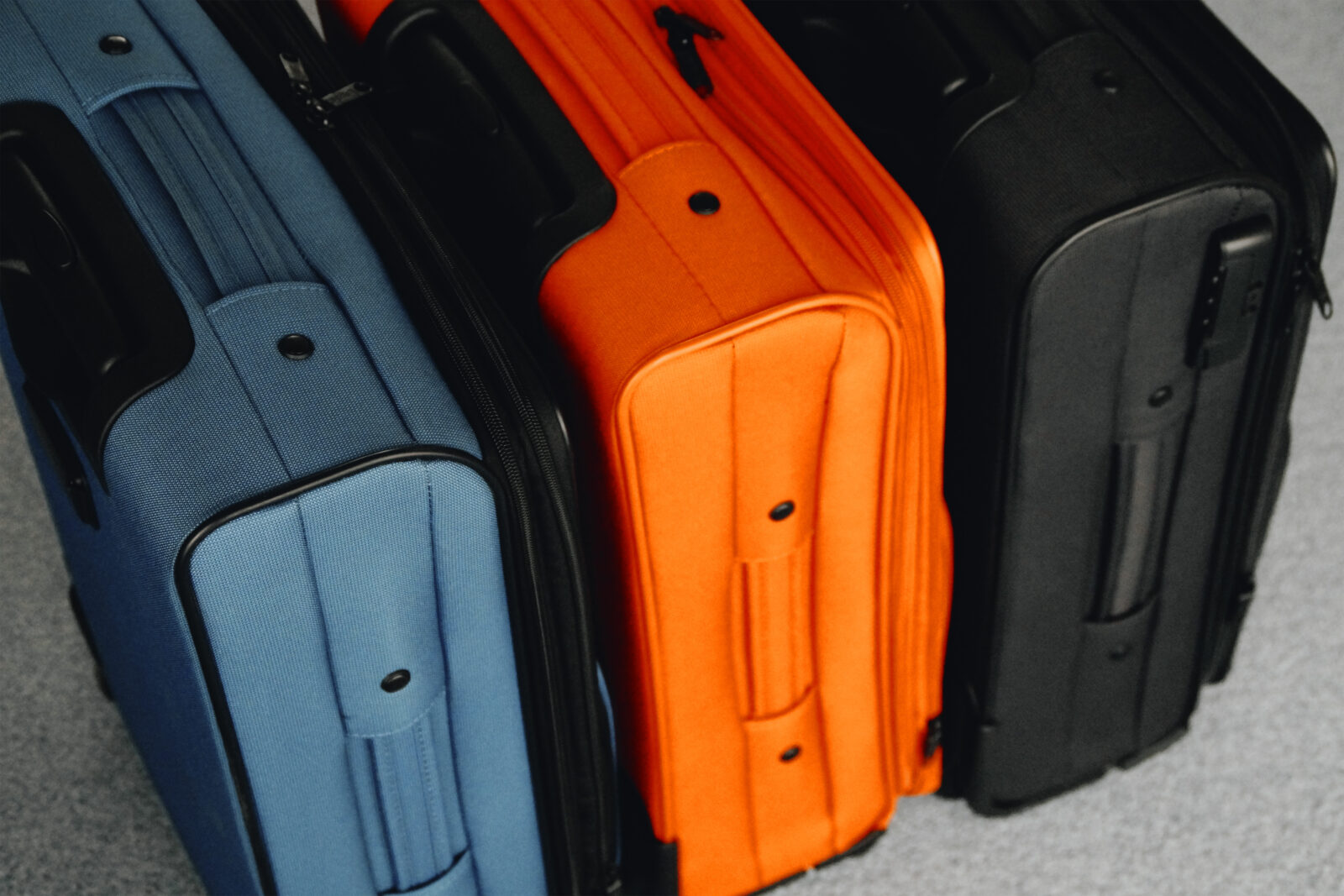
Over the years, I’ve taken more international flights than I can count — hauling dive gear across continents, living out of a backpack for months at a time, and learning the hard way what airlines really mean by “carry-on size.” I’ve managed to skive overweight fees, stood at check-in counters repacking my life on the floor while everyone behind me watched, and waited days for lost bags to arrive.
International luggage rules are not universal. They can change depending on what airline you fly with, where you are in the world, your ticket class, and sometimes by the mood of the check-in staff. Add in connecting flights, sports equipment (like dive gear), and things can get confusing fast.
This guide will hopefully break it all down for you.
Whether you’re going for a two-week holiday or doing what I did (booking a one-way ticket with no end date), understanding luggage rules can save you money and stress.
Cabin Baggage Rules
Cabin Baggage Allowance
Most international airlines will allow you to bring

A carry-on suitcase or bag can be a small roller suitcase or a backpack, but it must comply with the airline’s size and weight limits. These limits are in place to ensure it fits in the overhead compartment, and so they can estimate the overall total weight of cabin baggage on the plane.
General Guidelines |
|
|---|---|
Size (including handle and wheels) |
Approx 55x40x20 cm (22x16x8 in) |
Weight |
7-10kg |

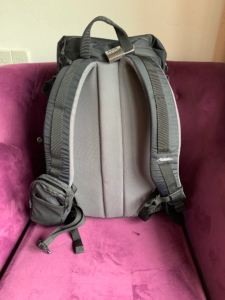
This Is My Carry-On Bag
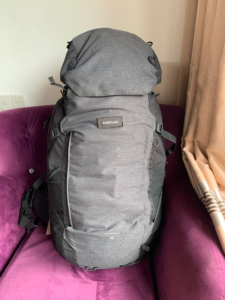
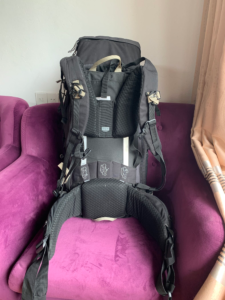
I love this bag. I normally use it as my carry-on bag as it’s just about small , but I’ve also used it as my main bag while I travelled through South America for 8 months. It’s got pockets galore, the zipper opens around the perimeter of the bag so it’s easy to get stuff you packed in the bottom, and it comes with an extra little satchel you can attach to the top of the bag with clips.
I bought it from Decathlon in 2023 and it has not disappointed. It seems to be quite popular. During my travels in South America and Vietnam I saw tons of other backpackers using it too. I couldn’t recommend it enough.
Personal Item
You are also allowed to bring a personal item on a plane. A personal item could be a backpack, a laptop bag, a handbag, etc. The general rule of thumb is that it should fit underneath the seat in front of you. These should be smaller than your carry-on bag or not larger than approx 45 x 35 x 20 cm (18 x 14 x 8 in). They are rarely weighed except for on low-cost airlines. See ‘Budget vs Full-Service Airlines’ below for more details.
I’ve always gotten away with having a backpack as my personal item and then also a bum bag or pouch where I keep my wallet, passport, and phone.
This Is My Personal Item
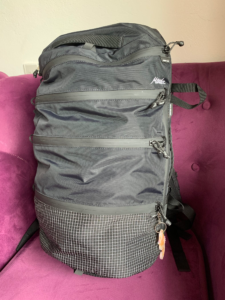
This Matador bag is my choice for a personal item. It’s just about small enough to fit under the seat in front of me. I’ve not had any airline staff call me out on it being too big yet (it helps not to stuff it to the brim). It’s very comfortable to wear on day hikes, thanks to its sternum and waist straps. It has plenty of pockets to keep things organised. This bag’s zipper is weatherproof, and also opens around the perimeter of the bag so it’s easy to access items that have been packed at the bottom. It’s made of a very durable material so scratches from branches, etc, aren’t going to rip up the fabric. The material is semi-waterproof. I’d recommend this bag to anyone.
Liquids
Liquids are allowed in your carry-on bag but only in bottles 100ml or smaller. All liquid containers must fit into (and be packed in) a transparent & resealable 1 litre plastic bag (some airports up to 2 litres).
100ml does not refer to the amount of liquid but to the volume of the bottle. A 200ml bottle that is half empty is against the rules and will be confiscated.
Examples of liquids
- Cosmetics: Hair gel, perfume, liquid foundation
- Medicines: Ear drops, syrups
- Foods: Honey, baby food
- Toiletries: Shampoo, toothpaste, lotion
- Miscellaneous: Snow globes, baby teething toys
If it can be spread, poured, or sprayed, it is considered a liquid.
There are no volume limits for packing liquids into your checked luggage.
Exceptions to the rule (Over 100ml allowed)
- Baby Products: Baby milk, food, and sterilised water for your journey
- Medicines: Essential liquid medicines with proof of prescription or a doctor’s letter
- Duty-Free: Liquids that have been bought after security (must remain in a sealed, tamper-proof bag)
Prohibited Items
These items should under no circumstances be packed in your cabin baggage because they will be automatically confiscated when you are going through security.
Some examples of prohibited items include
- Sharp objects: Knives, tools, scissors
- Weapons/self-defense items
- Hazardous/corrosive materials
- Large lithium-ion batteries
- Sports equipment: Bats, clubs
- Flammable items: Aerosol sprays, lighter fuel
Lithium-ion Batteries
Lithium-ion batteries are not allowed to be packed in your checked luggage. They should always be packed in your carry-on.
Lithium-ion batteries sometimes overheat in planes (I have noticed this with my laptop on a few occasions even when not in use). Having them in the cabin and not in the hold allows the airline crew to deal with the problem much faster if it becomes serious.
Remember this when you pack
- Action camera batteries
- Drone batteries
- Dive torch batteries
- Rechargeable AA/AAA batteries
- Power banks
- Dive torches
You will probably be asked to take them out of your carry-on bag at security so they can be x-rayed. I make sure to pack them all in the same pocket in my backpack so that I can find them and get them out quickly.
Checked Baggage Advice
Weight Limits
Weight limits for most airlines range from 20 to 30kg. Until quite recently, some of the top-tier airlines would let you check 2 bags with up to 20kg each, but almost all have now moved away from that. Some might still allow you to bring 2 bags, but their combined weight would need to be under the 20 to 30kg limit.
This can be quite complicated when travelling with diving equipment. I manage to travel with only one checked bag and I literally have to move my entire life every time I end a contract and move to a new place to work. I’ve massively slimmed down the amount of personal items I carry with me to prioritize space for my diving equipment. When I first left home I was carrying so much extra stuff that I never ended up using, but as time went by, more and more of it got left behind.
It helps a lot to travel with full-service airlines like Qatar and Emirates that don’t weigh your cabin bags. This allows you to fill them with your heavier items. Their lowest weight limit with economy fares usually starts around 25kg.
If you find that you really can’t do without the items taking up space in your bag, your only option is to pay a bit more for an extra checked bag.
This Is My Checked Luggage
When I first left to work as an instructor, I used a 60L hiking backpack for all my clothes and then a side bag for my diving equipment. As time passed, I wanted to find a way to get all my stuff in one bag. The hiking backpack was comfortable to carry, but the shape made it quite difficult to get my diving equipment inside. I could never get enough things inside it to get close to the airline’s checked bag limit. I eventually decided to swap over to a bigger bag and I haven’t looked back.
I chose this Oakley bag because of its large volume, but also because of its very durable material. It’s got 4 sets of wheels on the bottom and not 2, so it’s easy to roll around an airport. It doesn’t have much in terms of pockets but I prefer that to be honest. It’s basically a big shell.
Valuables
Don’t pack valuables in your checked luggage! They do sometimes get lost and you don’t want to be sweating at your final destination waiting to find out if you’re ever going to get it back. Envelopes full of money, credit cards, jewelry, laptops, etc. Keep all these things where you can reach them.
In the diving industry, it’s not unheard of to get paid in cash. This means that at the end of a season, you may be left with thousands of pounds or dollars worth of cash that you need to take home to put in the bank or take to your next destination. Make sure you keep this with you in your carry-on or personal item.
Bag Security
AirTags
Apple AirTags are a very useful bit of equipment. Slip one in your checked bag and forget about it. This way, if your bag doesn’t make it to your final destination and the airline can’t locate it, you can very quickly find out exactly where it is.
Padlocks
Not all airport workers are created equal. I always recommend locking your checked bag with a padlock. You might’ve never used one before and never had a problem, but why would you leave the option open for a problem to occur? Padlocks cost almost nothing; use them.
Labels
It’s worth having some kind of label on your bag so you can easily recognize it on the conveyor belt at baggage reclaim. It doesn’t have to be anything fancy; even a bit of bright tape around the handle is sufficient. I once had to stop a guy from accidentally taking my bag. He had exactly the same bag as me and simply thought mine was his, but that small piece of tape on my bag saved us both from a headache.
Lithium Batteries
Remember, lithium-ion batteries should always be kept in your carry-on bags.
How I Pack My Diving Equipment
Regulators
Regulators are arguably the most fragile pieces of your diving equipment. Enough of a knock in transit and you can find yourself with a free-flowing 2nd stage and a need for a service. For this reason, it’s especially important how you pack them. The general idea for the best way to pack them is to place them in a padded regulator bag. I personally don’t like this because it takes up a lot of space inside my bag. I prefer to disconnect the 1st stage, the 2nd stages, and the hoses, and pack them all individually. This way, I can wrap the delicate parts in bits of clothing and place them snugly among my other clothes so they don’t bounce around the bag or hit anything solid. You shouldn’t pack it near the edge of the bag. Place it somewhere in the middle so it has maximum protection. This method has worked for me for nearly 10 years now. You can buy a small dive tool or borrow some wrenches from the dive center to dismantle and reassemble the regulators.
Mask
Your mask is also a delicate piece of equipment. The glass lens is made of tempered glass so it could shatter if it gets hit in the wrong way. Conventionally, it’s recommended to pack it in a hard-shell mask box. I try to save every inch of space in my bag, so instead I fill my mask with underwear to avoid the frame bending when the bag is fully packed, and also wrap it in a t-shirt to prevent the glass lens from getting scratched. Again, it’s important you don’t pack it near the edge of the bag. Place it somewhere in the middle so it has maximum protection.
Fins
My fins are the main reason I changed over to a bigger bag. I have particularly big feet and use Scubapro Jet Fins. The best way I’ve found to pack them is to put one fin on either side of the bag. This way, they function as a frame for the rest of the things in my bag and provide protection for things I place inside that space. I fit delicate things inside the foot pockets as they provide a rigid casing that will protect them from impacts.
BCD
Regular jacket-style BCDs are incredibly awkward to pack. I moved over to a backplate and wing for the comfort and ease of packing. You can disassemble the BCD, which makes it incredibly easy to pack. If you buy a stainless steel backplate, you can wear it under your jacket until you finish checking in and then put it in your carry-on bag.
Budget vs Full-Service Airlines
A personal item is generally always included with any purchased fare, even with low-cost airlines.
What isn’t always included is a carry-on bag. This is one of the reasons the prices always appear so cheap on your initial search. The price reflects the bare bones value of the flight and then you pay extra for whatever services you might want. You could be looking at anything from £20-£30 to add a cabin bag.
Additionally, when you arrive at the gate there is a much bigger chance of your bag being weighed. This means you can’t stuff your bag the same way you would on a permium carrier. On most low-cost airlines you will even find that your 7-10kg weight allowance isn’t just for your carry-on bag but for your carry-on bag AND personal item combined.
Checked bags are almost never included with low-cost airlines and cost a premium to add. They are also very strict with weight limits (I’ve been asked to remove 0.1kg from my bag before). On full-service airlines they are included with your fare and the gate staff are often very lenient with being slightly overweight.
I’d generally advise against flying with low-cost airlines when traveling with diving equipment, at least based on my experience. Some of you may manage to make it work, and if you do, I tip my hat to you.
Full-service airlines tend to make the whole process much less stressful. The baggage allowances are usually more generous so you don’t have to worry as much about squeezing everything into strict weight limits or paying extra for additional bags. When you also factor in things like complimentary meals, an open bar, and included carry-on and checked baggage, the final ticket price often isn’t that different. In return, you usually get a much more comfortable and hassle-free travel experience.