
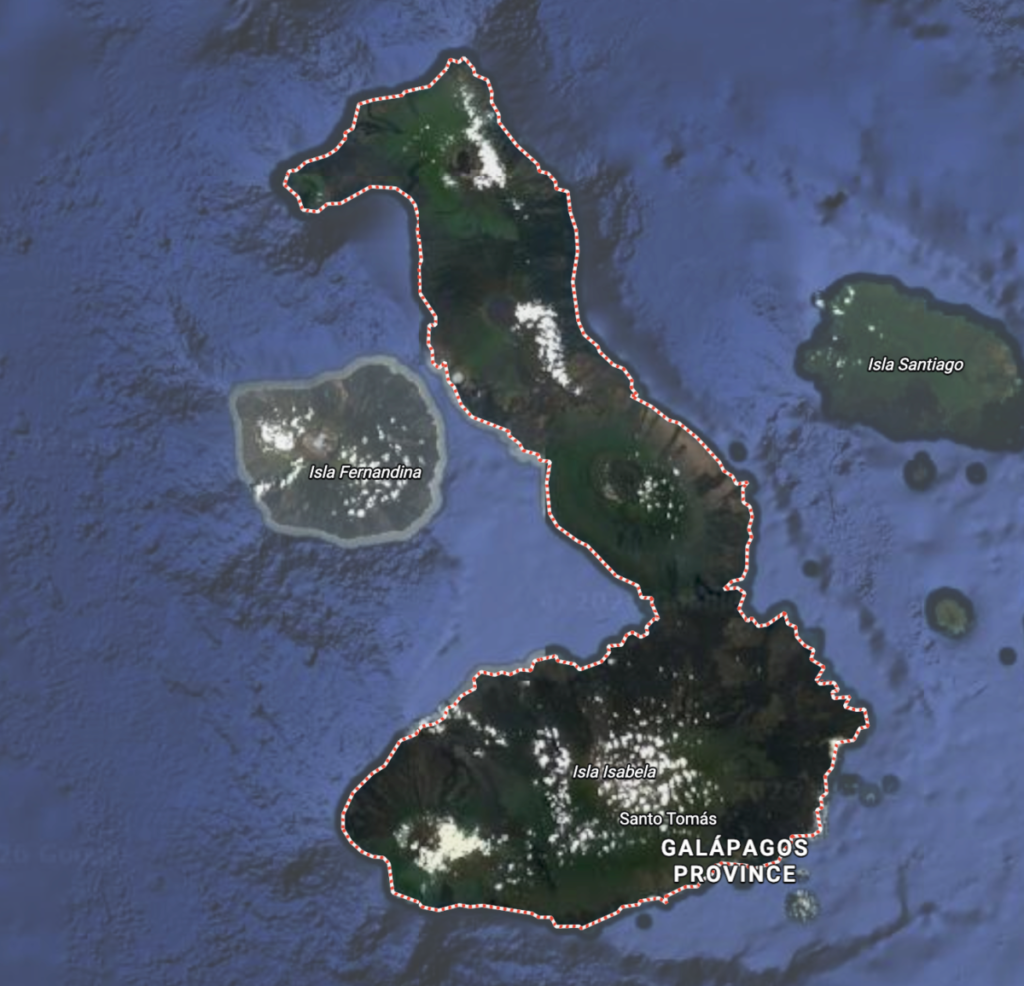
Isabela is the wildest of the three inhabited Galápagos islands. Most of the island is a nature reserve, so unless you have a guide, you’re largely restricted to the main town and the surrounding area. That doesn’t mean you’ll run out of things to do though. In fact, Isabela is probably the best island for seeing wildlife, with or without a guide. There’s plenty you can explore by yourself, and I really enjoyed the quieter atmosphere compared with the other islands.
Overview
- Location: Galápagos Islands, Ecuador
- Main town: Puerto Villamil
- Access: boat from Santa Cruz (~2 hours)
- Best season: Jan–May (warm water, best visibility
Quick Summary
Best for:

Not ideal for:

Best Things To Do in Isabela Island, Galápagos Without a Tour
Concha Perla Lagoon
- Best for: Snorkelling
- Wildlife: Sea lions, turtles, rays, reef sharks, penguins, iguanas
- Conditions: Calm water, sheltered bay
- Notes: No facilities, bring your own snorkel gear
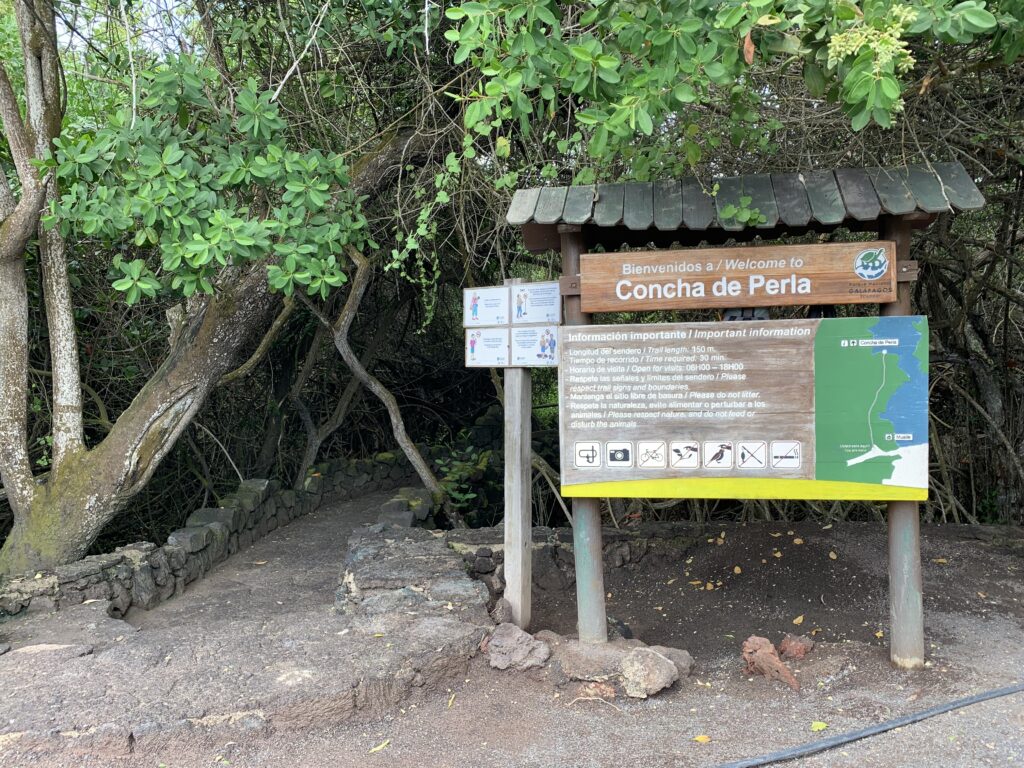
Concha Perla Lagoon is a 10-minute bicycle ride from town, tucked away in the mangroves just behind the jetty where the ferry arrives. You’ll find a boardwalk just behind the kiosk at the pier. The boardwalk goes through the mangroves and exits onto a small platform overlooking Concha Perla Lagoon.
It can get quite busy as it’s a popular snorkelling spot, so I would recommend going early. Low tide is a good time to go as you can see the bottom more easily, and you might even find a small shark or ray sleeping there.
Take your time and make your way around the perimeter of the lagoon and you may run into a sea lion, penguin, or even a turtle. It’s worth going here a few times just because of how easy it is to access and the chance of seeing so many different things.
Don’t bring too many things as there isn’t a lot of space on the platform to leave your things. I’d recommend a dry bag with a towel and some sun cream. You can clip the dry bag to the handrail while you go snorkelling.
El Estero / Mangroves
- Best for: Birdlife and exploring
- Wildlife: Blue-footed boobies, penguins, pelicans
- Conditions: Quite remote, bring sun protection and plenty of water
- Notes: Starts in mangrove tunnels and leads to open coast


This was by far my favourite thing to do in Isabela. We were very lucky that we timed it perfectly, completely by accident, but I can’t stress enough how important it is that you go when the tide is FALLING. Going a little before low slack tide will give you the perfect conditions and enough time to enjoy them too.
We rented bicycles in town and rode down towards the end of Puerto Villamil beach. The beach road will take you straight into the national park. Along the way you’ll pass a few pozas, and you’ll come across a sign that says ‘El Estero’. This is the point to leave your bicycle.
From here, you start walking through a small tunnel that has been cut through the mangroves. Eventually, it comes out onto a small beach, still inside the mangroves. We wondered if this was the end point, but then spotted a couple of curious Chinese tourists making their way through the water and mangroves.
If you can imagine the scene when you exit the mangrove tunnel and step onto the beach, the direction you need to go is left, towards the ocean. It can be a little deep in this small river, but once you make it out of the mangroves it shallows up significantly, until you’re only in about knee- to ankle-deep water.
Make your way further out towards the small collection of rocks you can see in the distance. This is where we came across one of the coolest things we saw in the Galápagos. Blue-footed boobies and pelicans were flying around together and diving into the ocean at the same time, trying to catch the small schools of baitfish swimming around below. Some penguins and sea lions even joined the party.
We were right in the middle of the action. It was amazing.
Make sure you’re fully sun-screened up as there is zero cover from the sun out there. Most importantly, keep a close eye on what the tide is doing. You don’t want to get caught out there when the tide comes back in.
Embarcadero Beach / Playa Isabela
- Best for: Wildlife spotting in shallow water
- Wildlife: Small Galápagos sharks, penguins, sea lions
- Conditions: Very shallow, clear in mornings
- Notes: Bring your own snorkel gear

Embarcadero Beach is right next to the jetty where the ferry arrives. On the beach you’ll usually find a big family of sea lions sleeping. Occasionally, one will slip into the water and swim past you on its way out hunting.
If you swim out to sea and to the right a little, we again did this at low tide, you’ll find a few small rocks in the water. This is where we found lots of penguins — the most penguins we saw during our whole time in the Galápagos. They were resting at the surface between dives, swimming around trying to catch the small schools of baitfish.
There were some blue-footed boobies and pelicans around too, diving into the water trying to catch the same fish. It was a much more watered-down version of what was going on at El Estero, but still well worth seeing.
If you bring a mask and snorkel, you’ll also be able to get a look at some juvenile Galápagos sharks swimming around in the murky, shallow water.
Wall of Tears / Muro De Las Lagrimas
- Best for: Cycling, hiking, viewpoints
- Wildlife: Tortoises, lizards
- Conditions: HOT and exposed, bring water and sun protection
- Notes: Historical site

The Wall of Tears is a long ride into the national park, but there are plenty of things to see along the way, including El Estero, El Túnel del Estero and, if you’re lucky, some of the giant tortoises that live around the island.
The path from El Estero to the Wall of Tears is quite long, so be prepared for some activity. Take plenty of water and sun cream as there isn’t much shade along the way.
The Wall of Tears has a pretty grim history. Between 1946 and 1959, Isabela was home to a penal colony where prisoners were forced to carry out hard labour. As a form of punishment, they were made to collect and carry huge volcanic rocks and build the wall by hand.
The disturbing part is that the wall had very little practical purpose. It was essentially a way of keeping the prisoners occupied and punishing them. The conditions in the penal colony were brutal, and many prisoners died from disease, malnutrition, accidents and the harsh treatment they received.
Today, the Wall of Tears is one of the few reminders of this dark period in Isabela’s history. It’s quite a strange feeling standing in front of it surrounded by such beautiful scenery and knowing how much suffering went into building it.
Right next to the wall you’ll find a small climb up to the Mirador de las Lágrimas and the Mirador de la Bahía. Both are worth the extra effort and give you great views over the surrounding landscape and coastline.
If you’re making the long trip into the national park, I’d definitely take your time and stop at the different places along the way rather than treating the Wall of Tears as the only destination.
Poza de los Flamingos (Flamingo Lagoon)
- Best for: Seeing flamingos
- Wildlife: Pink flamingos
- Notes: Simple boardwalk right on the edge of town


Poza de los Flamingos is right on the edge of town. It’s quite a simple setup, with a small boardwalk overlooking a large poza.
We were told that the flamingos move between different pozas at different times. The others are in the national park, including the ones you’ll pass on the right-hand side on your way to El Estero.
We were lucky enough to find large numbers of flamingos here every time we visited, so we didn’t have to go very far out of our way to see them.
Puerto Villamil
- Best for: Relaxed evenings and local atmosphere
- Food: Around the main square, along the beach, and near the Mercado Municipal
- Notes: Very quiet during the day but comes alive in the late afternoon
Puerto Villamil is a very quiet little town during the day. With the heat and most people out exploring the island, you won’t find a huge amount open apart from the bicycle rental shops and tour agencies.
Things really start to come alive in the late afternoon once the heat dies down. The main square and the surrounding streets fill up with local people going about their business and restaurants start opening for the evening.
When we were there in March there was some kind of celebration happening in the town. They had set up a huge stage in the square with local dancing and live music going on in the evenings.
Around the main square you’ll find plenty of restaurants aimed at tourists. If you want something more local, head towards the Mercado Municipal where we found some great places serving local food.
Best Tours From Isabela Island, Galápagos
Cabo Rosa Tunnels
- Snorkelling tour
- Lava formations
- Turtles, sharks, marine iguanas, blue-footed boobies and pelicans
- Full-day boat excursion (~5–6 hours)
Check out this link for tour information.
The Cabo Rosa Tunnels, also known as Los Túneles, is one of the most popular tours on Isabela. The tour takes you by boat from Puerto Villamil down to the southern part of the island, where old lava flows have created a maze of tunnels and arches.
You’ll have a local guide with you who will take you around the different areas and point out the wildlife along the way. There are usually a couple of stops before reaching the tunnels, followed by a short walk around the lava formations and some snorkelling in the clear, sheltered water.
The main attraction is the wildlife. You have a good chance of seeing sea turtles, white-tip reef sharks, rays, penguins and plenty of fish. There are also lots of birds around the lava formations, including blue-footed boobies and pelicans.
The tour takes up most of the day, but if you’re particularly interested in snorkelling and seeing wildlife, Cabo Rosa is definitely one to look into while you’re on Isabela.
Sierra Negra Volcano
- Hiking tour (~2 hours up)
- One of the largest calderas in the world
- More landscape and not wildlife, amazing views from the top in good weather
- Physically demanding
Sierra Negra is one of the most popular day trips from Puerto Villamil and is a great option if you want to see a completely different side of Isabela. The tour takes you up into the highlands to the Sierra Negra volcano, where you’ll get to walk around the huge volcanic crater.
You’ll have a guide with you who will explain a bit about the volcano and the different eruptions that have shaped the area. The main hike takes you along the edge of the crater and through some pretty incredible volcanic landscapes, with views across the island when the weather is clear.
The hike can be quite long and the weather at the top can be very different from what you get down in Puerto Villamil. Bring plenty of water and something warm to wear. The tour takes up most of the day.
Tintoreras Tour
- Short boat trip from Puerto Villamil (~2–3 hours)
- Easy walking around the lava formations
- Wildlife and marine life
- Good option if you want a shorter, less demanding tour
Las Tintoreras is a short boat trip from Puerto Villamil and one of the easier excursions to fit into your day. The islands are made up of old lava flows, with narrow channels running through them and plenty of wildlife packed into a relatively small area.
One of the highlights is walking around the islands with a local guide, who can point out the marine iguanas, penguins, sea lions and different birds that live here. The name Tintoreras comes from the white-tip reef sharks that can often be found resting in the shallow channels between the lava.
There was also an opportunity to snorkel. Our tour guide said the water around the lava formations is usually calm, and the visibility was great when we were there.
It’s a good choice if you want to see some wildlife without giving up most of your day because the trip is relatively short compared to others.
Places We Ate
Mercado Municipal has a lot of delicious cheap restaurants around it where you can get a menu del dia for about $5-6.
Empanadas Don Pipo is a good place to get lunch. The empanadas are huge and the filling is mega tasty. I lost count of how many I ate.
Yummy Yummy right on the beach also makes nice empanadas. It’s convenient if you want a snack when you go to watch the sunset.
El Dorado also has a menu del dia but if you’re looking to treat yourself a bit, the lobster here was amaaazing.
Albita Grill 2 is a bit on the fancier side. We walked past it a few days in a row and eventually tried it out and it didn’t disappoint. One of the best meals we ate in Isabela.
Practical Tips
- Bring your own snorkel gear if possible
- Rent a bicycle for a few days
- Bring plenty of water for long excursions
- Expect limited shade on hikes so bring sun protection
- The weather can change quickly (especially Jan–May rainy bursts)
- Book tours in advance in high season
Summary
- Isabela is the best island for access to nature
- You can see a lot of things without booking a tour but don’t try any long hikes without a guide
- Guided tours give you access to more remote locations and a lot more knowledge about what you’re seeing you’re seeing
- The center square and surrounding streets really come alive in the late afternoon/evening
Links
Why not have a look at our guides for San Cristóbal and Santa Cruz too?
What To Do In San Cristóbal Island, Galápagos (Complete Guide)